There Is No Religion Genocide in Nigeria
By Editorial Team
There is absolutely no religion genocide in Nigeria. President Donald Trump’s declaration of Nigeria as “a country of particular concern” is based on false and misleading claims designed to sow division and discord among Nigerians. The narrative is mischievous, politically motivated, and detached from the country’s real situation.
Nigeria’s security challenges are real, but they are not driven by religion. Terrorists in the Northeast and bandits in the Northwest have attacked mosques, churches, markets, schools, and entire communities without discrimination. They do not represent Islam, Christianity, or any religion; they are simply criminals who thrive on chaos.
Over the years, both Muslims and Christians have been killed, kidnapped, and displaced. The truth is that most of their victims were poor Nigerians, regardless of religion. The pattern of attacks has always shown that the ordinary people suffer most, not because of their faith, but because they are unprotected.
Christians in Nigeria, because of their stronger ties with Western societies, often document and publicize attacks more actively than Muslim communities do. This has sometimes created an imbalance in perception, but not in reality. While Christian groups file reports and petitions internationally, Muslim groups rarely collect such statistics. This is why many outside Nigeria believe Christians are the only victims, when in fact, Muslims have suffered higher casualties overall.
We do not need outsiders to tell our story or define our reality. Nigeria is not a nation at war with its Christians. It is a country battling a criminal network that threatens everyone. Those pushing the genocide narrative are not helping us; they are using us to serve their political and religious interests abroad.
Several American leaders and independent observers have also faulted and condemned the report that describes Nigeria as a country of Christian genocide. They admitted that the declaration was politically motivated and not supported by on-ground facts. These acknowledgments expose how propaganda can be weaponized against a growing African democracy.
Nigeria’s challenges, including insecurity, poverty, and governance, are serious, but they are ours to solve. What we do not have is the kind of religious persecution being painted abroad. Across markets, communities, and offices, Christians and Muslims live, trade, and work together every day. Families are mixed. Intermarriages are common. This is the real Nigeria.
Those who are uncomfortable with Nigeria’s growing strength and regional influence have always tried to use religion to divide the country. The strategy is simple: create a crisis, exaggerate it through foreign media, and use it to justify interference or weaken national unity. We have seen this playbook used in other countries, and it will not work here.
No one can deny that terrorism has hit Nigeria hard, but the numbers tell the truth. The majority of the dead are Muslims because the worst-hit regions are predominantly Muslim. Banditry in the Northwest and insurgency in the Northeast have taken far more Muslim lives than Christian ones. The few areas where Christians have suffered more are largely linked to local separatist movements, not state-sanctioned attacks.
It is therefore false to describe Nigeria as a country where Christians are under deliberate attack. Terrorism in Nigeria targets everyone. The violence has no religious face; it is driven by greed, lawlessness, and political manipulation.
Nigeria’s democracy remains strong. Elections are held every four years, leaders change, and no one rules for life. We do not build weapons of mass destruction or pursue religious wars. Instead, we are rebuilding our economy, improving local production, and restoring foreign reserves. Nigeria has even moved from being a major importer of refined products to exporting them. Our currency reforms are stabilizing trade, and local industries are gradually recovering.
Some foreign powers are uneasy about Nigeria’s rising confidence on the global stage. They were not pleased when Nigeria openly called for an end to the genocide in Gaza at the United Nations. They were equally uncomfortable when Nigeria refused proposals to host foreign refugees or to serve as a dumping ground for unwanted global policies. But that is our right as a sovereign nation.
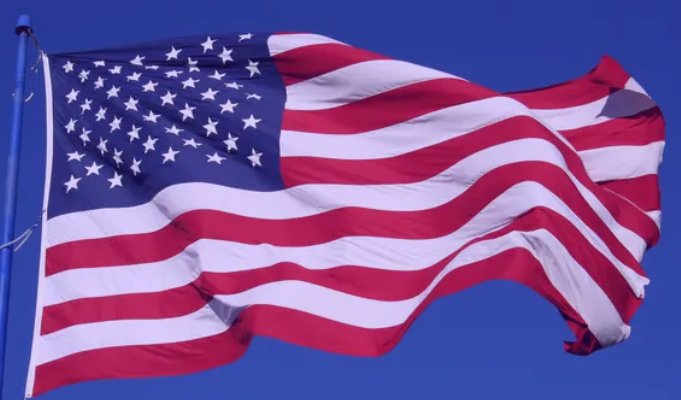
America has its own internal crises. In 2023 alone, gun violence killed more than 27,000 people, and there were over 650 mass shootings. Yet, no one describes the United States as a country of genocide against its citizens. The same fairness should be applied to Nigeria. If America’s aviation system can suffer repeated crashes, including one that claimed Nigerian business leader Herbert Wigwe and his family, then it should understand that every country faces its own challenges without needing to be condemned by outsiders.
Nigeria will not be used as a playground for foreign propaganda. Those who truly care for this country should do two things: speak the truth and protect our unity. When false claims are circulated, Nigerians must correct them with facts. When attempts are made to divide us along religious lines, we must resist and stand together as one people.
Our message to the world is simple. Nigeria is not a land of religious genocide. It is a land of hope, faith, and resilience. Christians and Muslims have suffered together, rebuilt together, and will continue to defend their country together. No amount of foreign politics or propaganda will change that truth.
About The Author